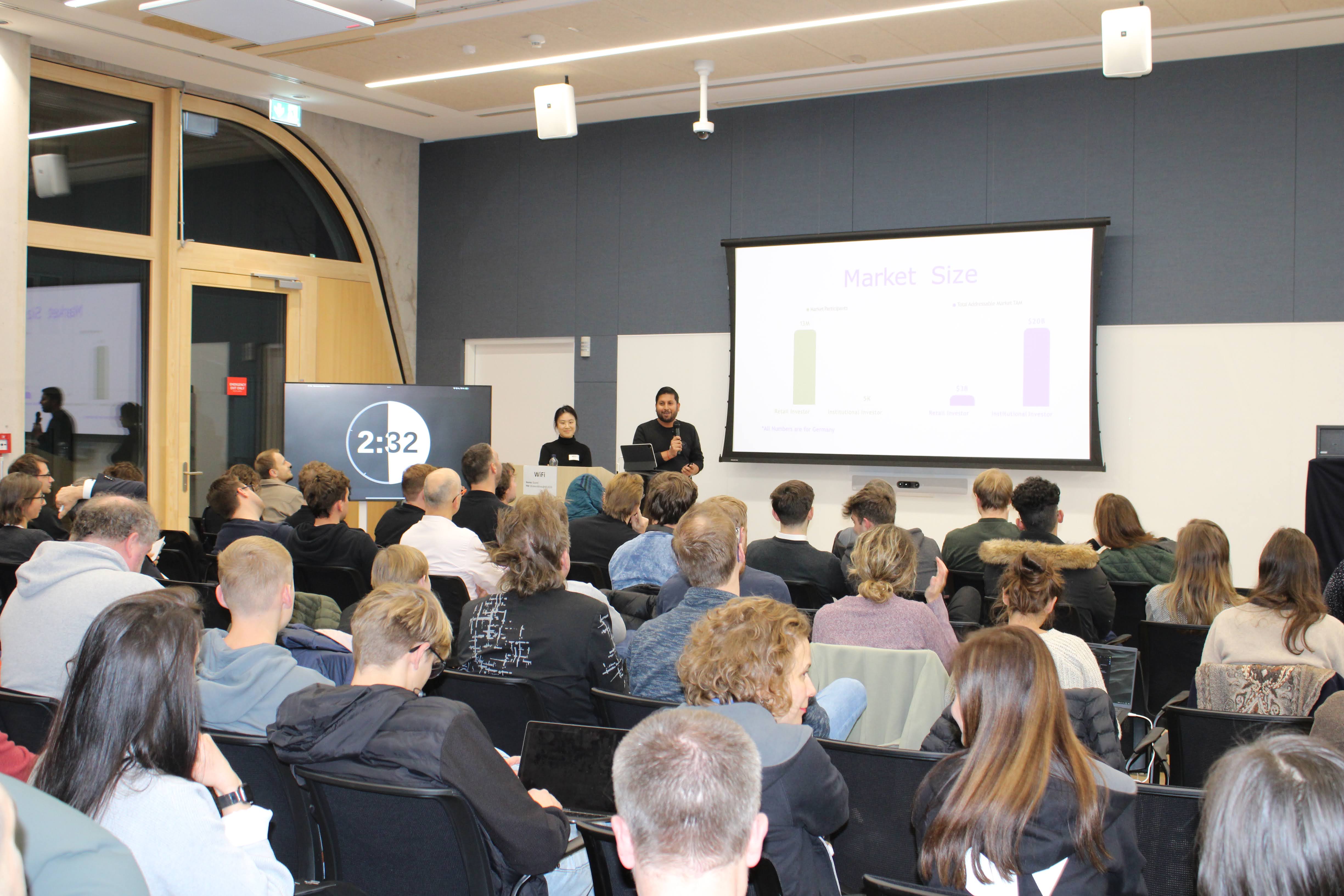
Participants at the Cyber Valley AI Startup Bootcamp 2023 in Stuttgart

Cyber Valley AI Startup Bootcamp

Date: April 2023 Locations: Stuttgart · Tübingen · Zurich The Cyber Valley AI Startup Bootcamp is one of Europe’s most prestigious AI entrepreneurship programs, organized by Cyber Valley — Germany’s largest research consortium for artificial intelligence, headquartered across Stuttgart and Tübingen. About the Program The bootcamp brought together researchers, engineers, and entrepreneurs from across Europe to explore the intersection of cutting-edge AI research and real-world product development. Sessions spanned Stuttgart and Tübingen (home to the Max Planck Institute and University of Tübingen) before culminating in Zurich, giving participants exposure to both the academic and startup ecosystems in the DACH region. ...
April 1, 2023 · 1 min · Akshat Gupta

Fairness in Machine Learning: Metrics, Trade-offs, and Evaluation

Fairness is not a property that can be established by checking whether one metric exceeds a universal threshold. It is a system-level question about people, decisions, benefits, harms, institutions, and the evidence used to justify an intervention. Machine-learning metrics still matter. They can reveal differences in selection rates, error rates, calibration, and performance across groups. But choosing a metric is already a policy decision: it determines which differences count as harms and which trade-offs receive attention. ...

October 15, 2023 · 12 min · Akshat Gupta
MESH Hackathon Stuttgart 2023

MESH Hackathon Stuttgart 2023

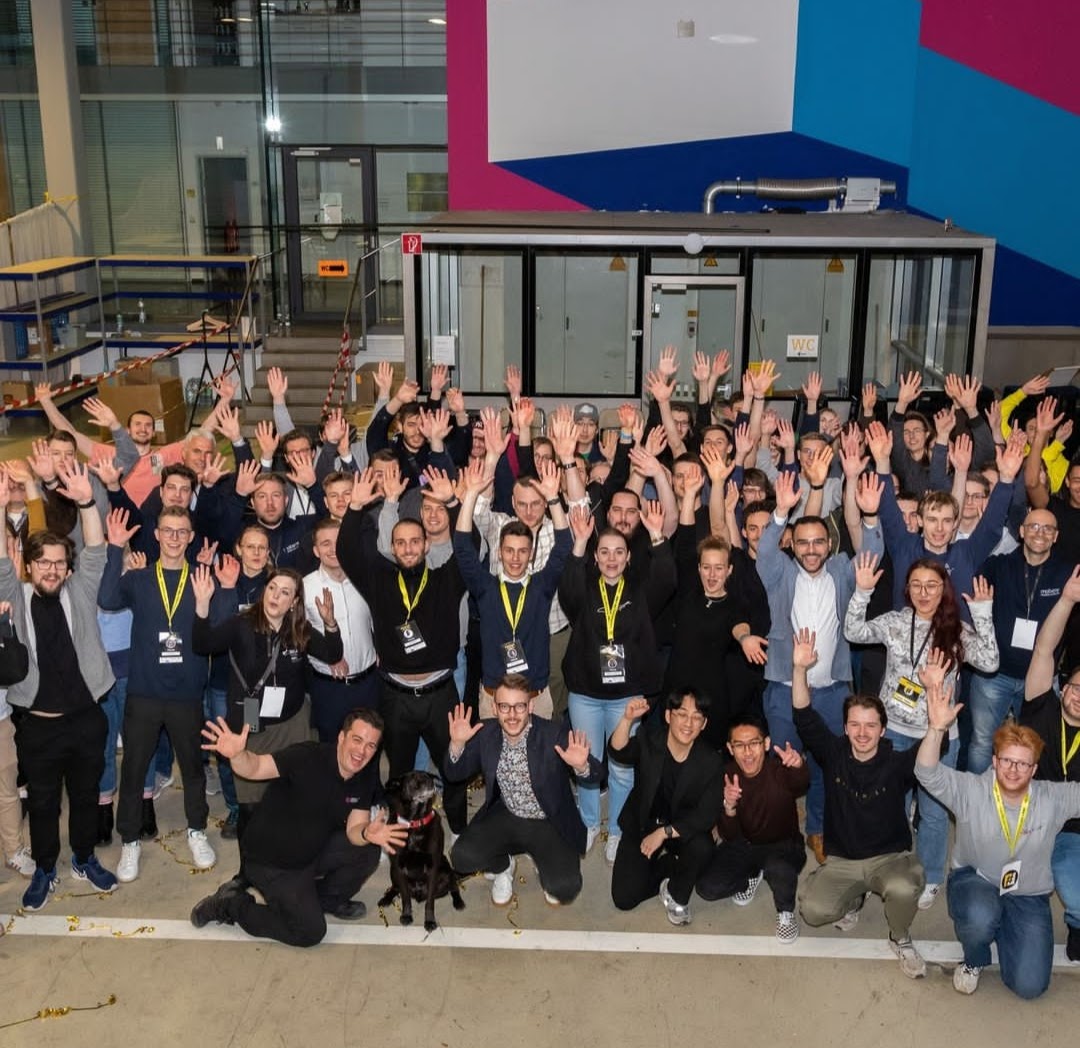
Date: April 2023 Location: Stuttgart, Germany MESH is a Stuttgart-based innovation and entrepreneurship platform that brings together students, researchers, and industry professionals to tackle real-world challenges through intensive hackathons. Format Over an intensive weekend, teams collaborated to build working AI prototypes addressing practical problems in areas ranging from healthcare and sustainability to finance and productivity. The hackathon format pushed participants to move fast — from ideation to demo-ready product within 48 hours. ...

April 15, 2023 · 1 min · Akshat Gupta

AI Workshop in Ujjain

Date of Event: December 17, 2019 Venue: Ujjain Event Overview: Ujjain witnessed an enriching educational event in December 2019, with a workshop dedicated to introducing the fundamentals of Artificial Intelligence (AI). Designed for beginners and enthusiasts alike, this event served as a primer to the world of AI, attracting a diverse audience from students to professionals keen on understanding this cutting-edge technology. Highlights of the Workshop: Fundamentals of AI: The workshop focused on the core principles of AI, providing a comprehensive introduction to its basic concepts and terminologies. ...

December 17, 2019 · 2 min · Akshat Gupta

Ontologies in Knowledge Graphs: Reasoning and Validation

An ontology gives a knowledge graph an explicit, machine-readable account of a domain: the concepts that exist, the relationships between them, and the statements that follow from those definitions. It can align data from different systems, support inference, and make the intended meaning of a graph inspectable. That does not make an ontology a database schema, a data-quality checker, or a guarantee that every statement in the graph is true. Those responsibilities require different mechanisms. In particular, OWL reasoning and SHACL validation answer different questions: ...

January 15, 2024 · 11 min · Akshat Gupta

Knowledge Graphs: Data Models, Construction, and Graph RAG

A knowledge graph represents entities and the relationships between them in a graph-shaped data model. Its value is not that graphs automatically contain truth or make systems explainable. The value is that identity, relationships, provenance, and domain meaning can be made explicit and queried together. That distinction matters in applied AI. A graph built from noisy documents can preserve extraction errors. A graph query can return an irrelevant path. An ontology can support valid inference from false assertions. A language model can still misread correctly retrieved facts. Knowledge graphs create useful structure; reliability comes from the evidence, controls, and evaluation around that structure. ...

March 15, 2024 · 12 min · Akshat Gupta

Understanding Attention in Transformers

Attention lets a model construct a new representation of each token by mixing information from other tokens. The mixing weights depend on the current input, so the same word can use different context in different sentences. That description is useful but incomplete. Attention does not inherently know token order. A causal mask is not a positional encoding. A key-value (KV) cache is not long-term memory. Retrieval-augmented generation (RAG) and mixture-of-experts (MoE) are not attention variants. Attention maps can also be informative without being faithful explanations of a prediction. ...

August 15, 2024 · 8 min · Akshat Gupta